What Makes a Provider Vendor-Ready?
A practical overview of the service model, policies, staffing, documentation, training, and operating systems that support a stronger organizational foundation.
Explore the key questions →Fiducia Assurance shares thoughtful guidance, practical questions, and clear explanations designed to help Regional Centers, providers, and mission-driven organizations strengthen quality, accountability, and organizational readiness.
Strong decisions begin with clear information. Fiducia Assurance reviews emerging guidance, organizational practices, service outcomes, and relevant legal or policy considerations to help leaders understand questions they may not yet have encountered.

These introductory topics reflect common areas leaders consider when strengthening services, preparing providers, reviewing performance, or responding to new information.
A practical overview of the service model, policies, staffing, documentation, training, and operating systems that support a stronger organizational foundation.
Explore the key questions →How clear expectations, respectful review, consistent follow-up, and practical coaching can support a healthier quality culture.
Explore the key questions →Why meaningful service quality should also be visible in participant experience, choice, engagement, progress, and outcomes.
Explore the key questions →A strong provider should be able to explain how its service model, staffing structure, policies, documentation, supervision, and quality practices work together.
Quality assurance should not exist only to identify failure. It should help leadership understand what is working, where risk may be developing, and what changes are most likely to strengthen outcomes.
Communicate standards, roles, and responsibilities in language people can understand and apply.
Consider context, recognize strong performance, and address concerns without creating unnecessary fear.
Connect findings to proportionate action, coaching, learning, and measurable improvement.
Attendance records and completed forms may show that a service occurred, but they do not always show whether the service was meaningful.
Consider whether preferences are respected and communication needs are understood.
Examine whether staff interactions preserve dignity and support meaningful participation.
Look for evidence that services support independence, individual goals, and meaningful opportunity.
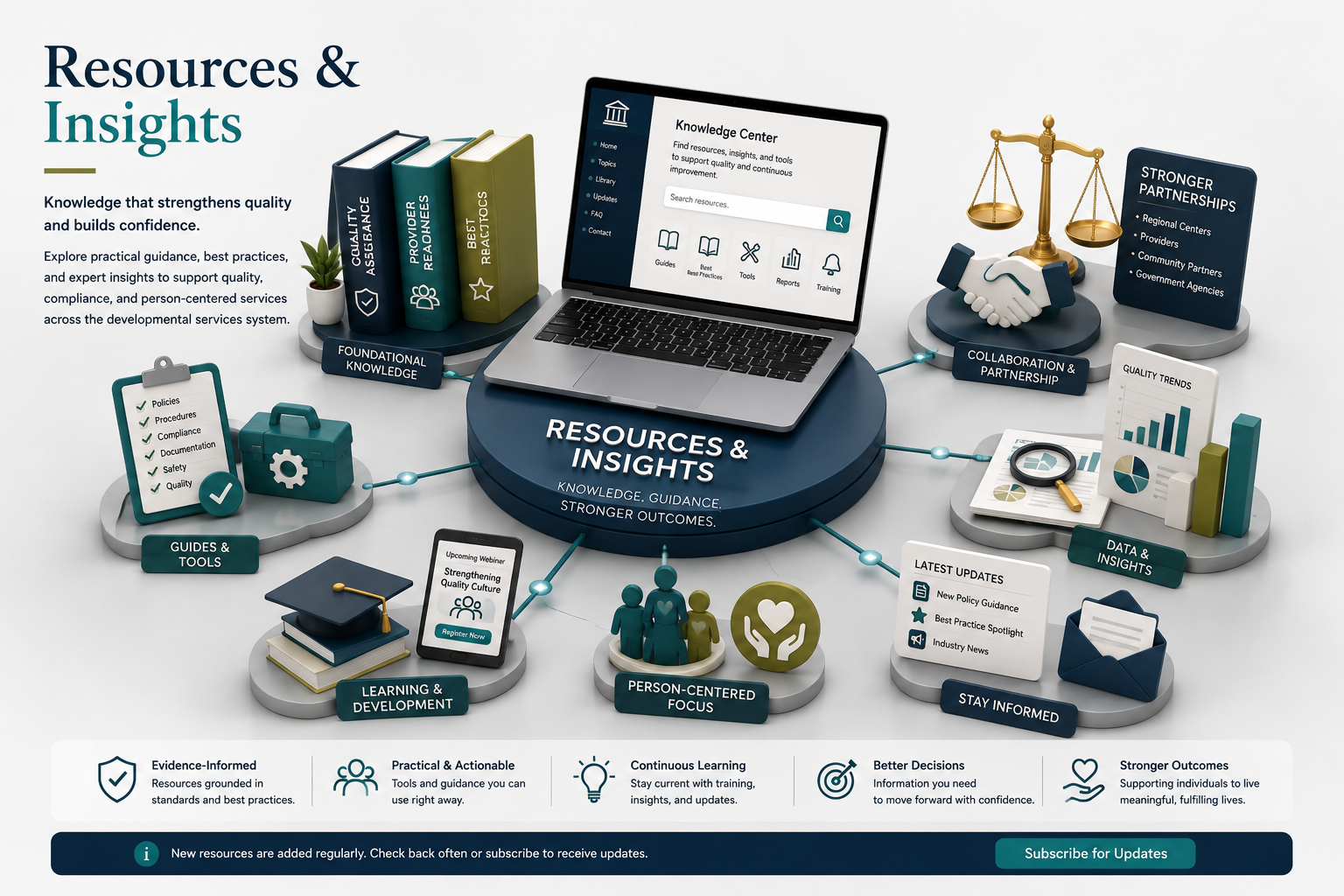
Our growing knowledge center connects foundational guidance, provider support, data, learning, policy awareness, and person-centered practice.
These answers explain Fiducia's role and the limits of that role within an engagement.
No. Fiducia adds capacity and independent perspective while the Regional Center retains leadership, authority, and decision-making responsibility.
No. We may observe provider-operated transportation when it is part of an authorized service review, but Fiducia Assurance does not provide transportation and does not evaluate public transit authorities.
Observations are designed to be respectful and low-profile so normal service routines can continue as naturally as possible.
No. Training, coaching, implementation support, or follow-up is provided only when requested and authorized by the responsible organization.
Yes. Fiducia may review readiness, policies, procedures, documentation, staffing plans, and operational systems. Vendor approval remains with the responsible Regional Center or other authority.
No. Fiducia may provide preparation support or independent evaluation, but it does not grant vendorization, licensing, certification, public benefits, or regulatory approval.
We consider culture, language, communication, ability, background, lived experience, dignity, and individual preference important elements of quality and person-centered service.
Findings are directed to the authorized partnering organization according to the scope and communication procedures established for the engagement.